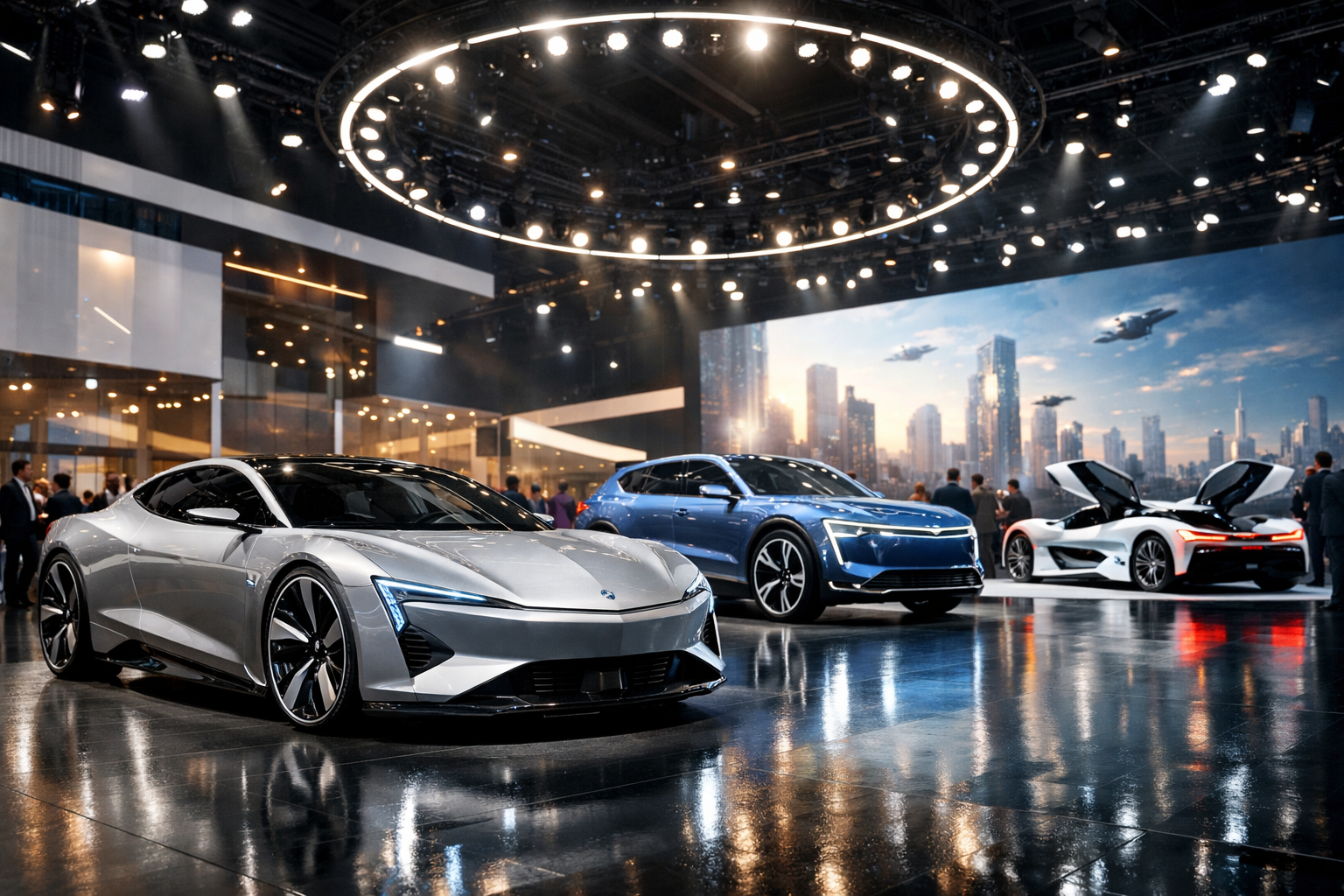

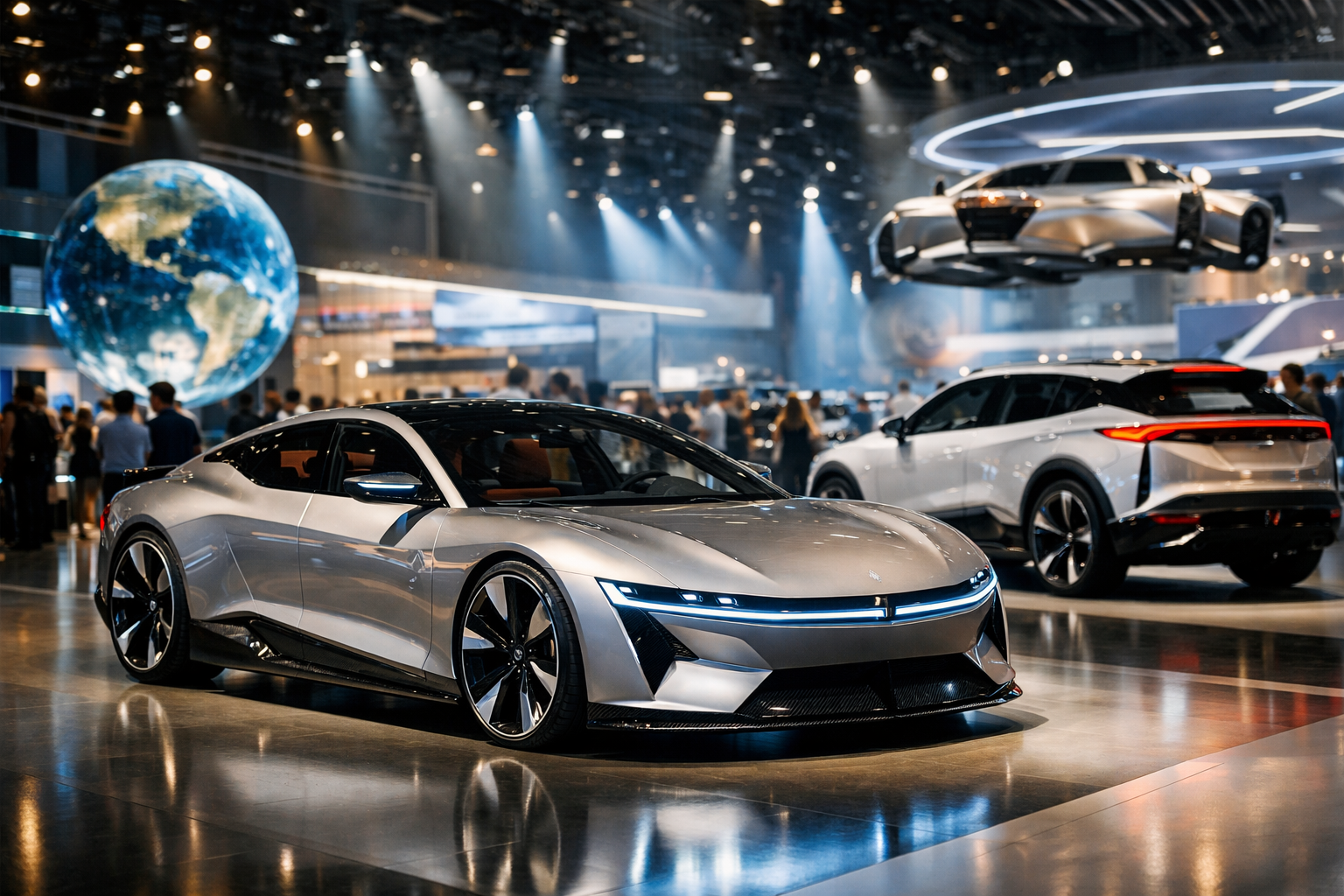
The wildest thing about the 2026 auto shows isn’t the cars—it’s how many sacred cows got quietly escorted out the back door. Horsepower arms races are cooling, touchscreens are finally being questioned, and several brands admitted, through clenched teeth, that “software-defined vehicle” was mostly marketing soup. Walking the halls, I realized the future of cars is less sci‑fi fantasy and more brutally pragmatic.
This matters right now because the stuff teased at the 2026 auto shows is what you’ll actually be able to buy in 2027 and 2028, not some vaporware concept with glow-in-the-dark wheels. I’ve driven dozens of SUVs, EVs, and so-called performance sedans, and the direction is clear: fewer gimmicks, more efficiency, and a quiet return to basics. That’s good news—unless you enjoy paying $80,000 for mediocrity.
The big takeaway from the 2026 auto shows is that automakers are finally reacting to buyers, not Twitter hype or Silicon Valley TED Talks. Tesla, Toyota, Volkswagen, Hyundai, BMW, and even BYD are converging on similar answers, and that should both excite and worry enthusiasts. Let’s unpack what the circuit—from Detroit to Geneva to Tokyo—really told us about future vehicles.
Electrification Grows Up (Finally)
The EV conversation at the 2026 auto shows felt less like a sermon and more like a spreadsheet, which is exactly what buyers want. Instead of breathless claims, we saw realistic ranges of 280–350 miles, charging curves peaking around 250 kW, and prices starting around $35,000 to $45,000 for mass-market models. That’s a massive shift from the $60k-plus “entry-level” nonsense of 2022.
Hyundai’s next-gen Ioniq platform, VW’s SSP architecture, and BMW’s Neue Klasse concepts all hammered the same point: efficiency beats brute battery size. My hot take? Tesla accidentally won the EV war early, then lost the narrative by ignoring interior quality and ride comfort—areas where Toyota and BMW are now closing in fast. For real-world data on efficiency claims, I still cross-check FuelEconomy.gov.
Design Is Breaking Free from the EV Blob
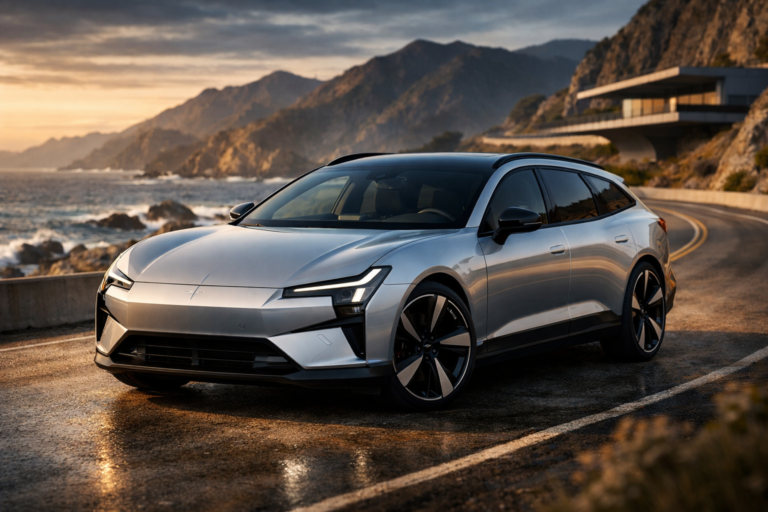
If you’re tired of cars that look like melted soap bars, good news—the design pendulum is swinging back. The 2026 auto shows were packed with sharper creases, higher beltlines, and proportions that didn’t scream “wind tunnel hostage.” Audi, Kia, and even Mercedes finally admitted that aerodynamics don’t have to equal boredom.
This shift lines up perfectly with what we discussed in Electric Design Changes Reshaping Brand Identity. Brands are realizing that recognizable silhouettes sell cars just as much as range numbers. Controversial take: Tesla’s refusal to meaningfully update its designs is starting to make it feel like the automotive equivalent of wearing skinny jeans in 2026.
Performance Isn’t Dead, It’s Just Selective
Performance cars didn’t vanish—they just got more honest. Instead of 700-hp electric sedans nobody tracks, we saw 400–500 hp machines with better cooling, real brake packages, and 0–60 times in the low 4-second range that can actually be repeated. Think next-gen BMW M3 EV prototypes, Hyundai N concepts, and Toyota’s stubborn insistence on driver engagement.
I overheard one engineer say lap consistency matters more than peak output, which felt like Chris Harris whispering in my ear. Meanwhile, Dodge and Ford are recalibrating what “muscle” means in an electrified world, while Porsche quietly continues to benchmark everyone. If you want proof enthusiasts still matter, just look at crowd reactions compared to generic crossover reveals.
Interiors Are De-Techifying
The most refreshing trend wasn’t visible from 20 feet away—it was tactile. Physical buttons are creeping back, screen sizes are shrinking to sane 12–14 inches, and materials quality is finally being discussed without PR gymnastics. After years of iPad dashboards, brands like Mazda, Toyota, and even VW admitted customers hate digging through menus to turn on heated seats.
This ties directly into the broader new cars luxury shift, where “premium” got confused with “annoying.” Hot take: Tesla’s interior minimalism isn’t brave anymore—it’s lazy. The pub test applies here: if you can’t explain your HVAC controls over a beer, you’ve failed.
SUV Fatigue Is Real
Yes, SUVs still dominated floor space, but the tone changed. Compact and mid-size models emphasized lighter platforms, better MPG—around 28–35 combined—and improved handling instead of sheer bulk. Toyota RAV4, Honda CR‑V, Hyundai Tucson, and Mazda CX‑5 competitors all leaned into “right-sized” messaging.
The full-size electric SUV parade felt…tired. When every brand promises 500 hp and three rows, differentiation dies, and buyers notice. I predict one controversial outcome: some luxury brands will quietly kill their largest EV SUVs by 2028 because demand won’t justify the margins.
Software Promises Are Being Dialed Back
Remember when every car was “upgradable forever”? The 2026 auto shows featured a humbler tone, with brands admitting software updates will focus on stability, not radical feature drops. Over-the-air updates now mean bug fixes and navigation tweaks, not transforming your car into a spaceship overnight.
This is a win. Automakers like Ford, GM, and BMW learned the hard way that half-baked software tanks owner satisfaction faster than bad fuel economy. For safety transparency as tech evolves, I keep an eye on NHTSA, especially as ADAS systems grow more complex.
Auto Shows Themselves Are Evolving
The biggest meta-trend? Auto shows aren’t dying—they’re slimming down. More regional focus, fewer absurd concepts, and more near-production vehicles dominated the circuit, echoing what we covered in Auto Shows 2026: Are They Worth It?. Brands want ROI, not viral TikTok moments.
Frankly, that’s great for buyers. When manufacturers put real cars on stands instead of fantasy props, expectations get clearer and trust slowly returns. The future of cars looks less flashy, more competent—and that’s exactly what most people want.
Pros
- More realistic EV pricing and range claims
- Design diversity returning across segments
- Improved focus on efficiency and usability
- Performance cars built for real driving
Cons
- Large electric SUVs feel increasingly pointless
- Some brands still overpromise software
- True enthusiast cars remain niche and expensive
The final word on the 2026 auto shows is refreshingly grounded. Cars are becoming better tools, not rolling tech demos, and that’s a win for anyone who actually drives. If this trajectory holds, the future won’t be louder or flashier—it’ll be smarter, and frankly, more fun.
Frequently Asked Questions
What did the 2026 auto shows reveal about future vehicles?
They showed a shift toward realistic EV ranges, better efficiency, and fewer gimmicks. Most concepts were close to production rather than fantasy designs.
Are EVs becoming more affordable after the 2026 auto shows?
Yes, many upcoming EVs are targeting starting prices around $35,000–$45,000. Automakers are prioritizing efficiency over massive batteries.
Did performance cars disappear at the 2026 auto shows?
No, but they became more focused. Expect 400–500 hp cars with better braking and cooling rather than headline-grabbing numbers.
Are physical buttons really coming back?
Slowly, yes. Several brands admitted customer frustration with touch-only controls and are reintroducing tactile switches.